
When your work happens at customers’ homes and job sites, a full office building may be more than you need. But a storage garage is not automatically suitable for every business. Start with the workday you need it to support.
Describe the Use Before Choosing the Unit
Write down what you want to store, who needs access, and what will happen at the garage. For a plumber or electrician, that might include a work vehicle, tools, an enclosed trailer, and inventory. Be specific about materials, batteries, liquids, compressed gases, deliveries, and proposed work.
At 404, customer visits and public access are not allowed. A storefront, showroom, customer pickup counter, or public office is outside the offering. Review other activities and access needs with the team before purchase.
Test the First and Last Trips of the Day
Use your own home and typical job locations to compare travel. A Foley contractor working near St. Cloud has a different route from an owner in Sartell whose jobs stay close to home. Map home to 1400 19th St NE in Sauk Rapids, then the garage to the job, and finally the return trip.
Consider when you need access and how often you would load or unload. Ask about employee entry and delivery procedures instead of assuming the property works like a staffed commercial warehouse.
Draw the Equipment Layout
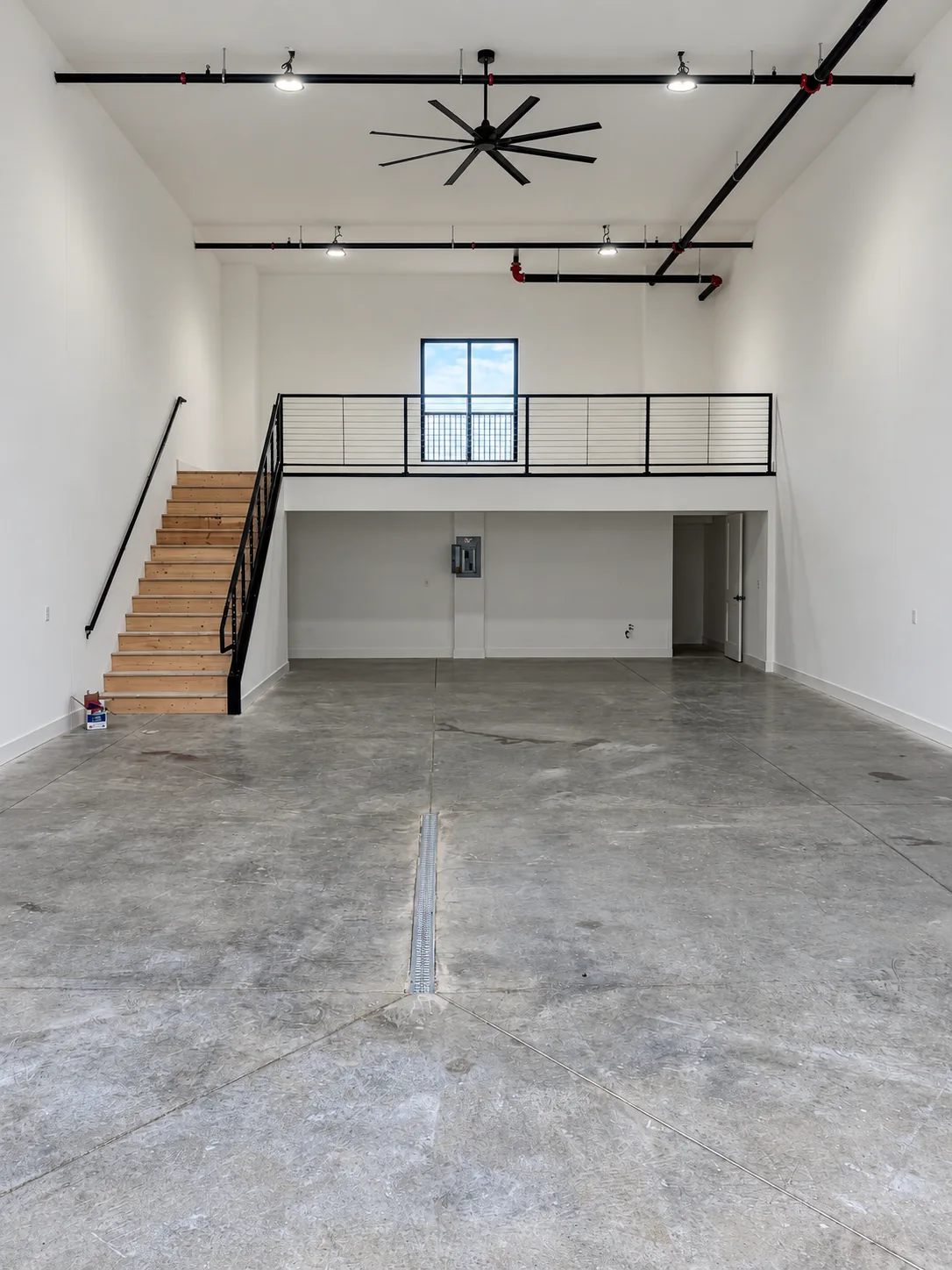
Mark the vehicle and trailer footprints, door swings, shelves, and loading paths. Add the space required to reach items at the back. Check the exact door opening and any stairs, bathrooms, or supports in the unit.
404 publishes 30 × 60 and 40 × 60 layouts, radiant in-floor heat, and 100-amp panels. Confirm the installed systems and whether they meet the proposed use. Electrical capacity alone does not establish permission for fabrication or other commercial work.
Request the Documents and Current Costs
- Written confirmation that the intended use is permitted.
- Association rules, access procedures, and any modification approvals.
- Current purchase price, dues, taxes, utility responsibilities, and maintenance obligations.
- Insurance requirements for the unit, tools, vehicles, and materials.
- Any costs for shelving, electrical changes, or interior work.
Compare these with the rental or commercial property you would otherwise choose. A garage condo is a purchase; it is not an advertised office lease or month-to-month storage rental.
Read the contractor storage guide for the property’s limits, then use the buying-versus-renting comparison and published purchase prices to prepare for a tour.